
Vedanta Resources (VRL), the diversified mining company headquartered in London, is giving final touches to a plan to raise up to $2.5 billion (about Rs 20,800 crore) as debt repayment deadlines near. The company owned by billionaire Anil Agarwal plans to do this by a combination of instruments, including issuing preference shares in the holding company to a slew of offshore investors from West Asia, and taking on another loan to refinance older debt at a higher interest rate. VRL, which is the group's holding company, is also looking to sell part of its 63.71 per cent stake in the Indian listed subsidiary Vedanta Ltd to meet funding requirements, said a banker close to the development.

Even as the slowdown in the information technology (IT) services sector deepens, banking, financial services and insurance (BFSI), as well as oil and gas companies, emerge as the primary drivers of corporate earnings in the country. The IT services sector's share in corporate earnings declined to a five-year low of 17.4 per cent in the second quarter (Q2) of 2023-24 (FY24), whereas banks and finance companies accounted for 46.5 per cent, and oil and gas firms contributed 16.8 per cent. At their peak, IT services firms like Tata Consultancy Services (TCS), Infosys, HCLTech, and Wipro represented just over a third of the combined net profit of all listed companies in the Business Standard sample.

10 non-bank and non-finance stocks from the BSE500 Index universe that offer an optimal blend of low valuation, reasonably robust revenue and earnings growth in recent quarters, a strong balance sheet, and most importantly, positive cash flow from their operations.

Foreign banks and private credit funds are queuing up to fund acquisitions by Indian companies who are buying out their local rivals. The Adani Group, Torrent Group, and the Hindujas have approached several foreign banks and private equity (PE) firms to fund their acquisitions. Global investors have about $2 trillion of funds to invest, and about $100 to $150 billion is set aside for India, according to an estimate by JP Morgan.

Capital expenditure by Indian companies is likely to see an uptick in the upcoming quarters as capacity utilisation has surpassed the critical threshold of 75 per cent, and numerous companies have deleveraged their balance sheets, according to analysts. The first quarter of the current financial year has shown improved profitability, driven by a decrease in input prices. This, according to analysts at Care Ratings, should stimulate a revival in the private capex cycle.

The combined net profit of "early bird" companies, those that have declared their quarterly results, rose for the third consecutive quarter in July-September 2023 (Q2FY24). But the figures suggest a continued slowdown in revenue growth and stagnation in earnings over recent quarters. This slowdown is severe for companies in the manufacturing and non-financial service sectors.

'A cutback in hiring and compensation growth by IT companies will have a significant impact on consumer demand, especially in the urban sector of the economy.'

The Hinduja group is learnt to be looking at alternative means of financing, including private credit, to fund its Rs 9,661 crore all-cash offer to acquire Reliance Capital. The regulator, Insurance Regulatory & Development Authority of India (Irdai), had earlier rejected the collateral offered by the group to raise funds. The Hinduja group was in talks with Barclays, JPMorgan, Cerberus Capital Management and Apollo Global Management to raise up to $850 million.

Corporate India is busy restructuring - through mergers, demergers and splits. That seems to be the new normal as CXOs and boards brainstorm on how to create assets and value. The pitch rose significantly during the third quarter of this financial year (FY24), translating into $32.9-billion worth of such deals - the highest quarterly total since the HDFC Bank-HDFC merger announced in FY22 Q2.

India's corporate sector is likely to report a slowdown in revenue growth and earnings for the July-September 2023 period (Q2FY24), according to earnings estimates by brokerages, after the country's top listed companies posted higher than expected profits for the first quarter. The combined net profit of Nifty50 companies, based on brokerage estimates, is expected to have grown by 19.6 per cent year-on-year (Y-o-Y) to Rs 1.75 trillion in Q2FY24 - a sharp deceleration from 37.6 per cent Y-o-Y growth in the combined earnings of index companies in the April-June 2023 period. According to estimates, the combined earnings in the second quarter would be down 8.8 per cent on a quarter-on-quarter (Q-o-Q) basis and the lowest in the past three quarters.

The reported buyback of Temasek's 20 per cent stake in Tata Play by Tata Sons will be the third instance of Tata Group providing an exit to a foreign partner in recent years. In 2018, Tata Sons paid $1.27 billion to DoCoMo to buy back 26 per cent of the group's telecommunication venture, Tata Teleservices. This was followed by Tata Sons acquiring AirAsia Berhad's 49 per cent stake in AirAsia India in two tranches to make it a wholly owned subsidiary.
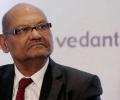
Indian lenders are unlikely to clear the vertical split of BSE-listed Vedanta Ltd in a hurry, considering that the demerger would reduce the fungibility of cash flows across businesses and increase their volatility, according to analysts. The demerger plan, which would result in six separate listed entities, would require approval from shareholders, lenders and other statutory bodies. "We believe that a separate listing of different businesses would reduce the fungibility of cash flows across businesses and increase the volatility of cash flows.

Metal and mining companies, such as Tata Steel, JSW Steel, Hindalco, and Coal India, have been among the top-performing sectors on the bourses in recent months. The S&P BSE Metal Index is up 13 per cent in the past three months, rallying 29 per cent in the past year, outperforming the broader market. For comparison, the benchmark S&P BSE Sensex has only seen a 1.7 per cent increase in the past three months, with a 15 per cent gain since the end of September last year.
Analysts assert that Vedanta Group's plan to demerge India-listed Vedanta Limited into six listed entities will not resolve the debt problem of its promoter entity, Vedanta Resources (VRL). They suggest that additional asset sales or stake sales by promoters will be necessary to repay the debt. Vedanta is already considering the divestment of its iron-steel division and its copper plant.

Reliance General Insurance Company (RGIC), a subsidiary of Reliance Capital, finds itself in a bind as the Directorate General of GST Intelligence (DGGI) has issued multiple Show Cause Notices (SCNs) amounting to Rs 922.6 crore. This development comes at a time when Reliance Capital is currently undergoing a debt resolution under the National Company Law Tribunal (NCLT) process in which the Hinduja group has emerged the winner. The Hinduja acquisition is currently awaiting the Supreme Court's approval after the Torrent group, the winner of the first round, challenged the second auction conducted by the lenders of Reliance Capital.

The recent surge in crude oil prices could shave off the gains made by India Inc in profit margins in the past few quarters. Worse, it comes at a time when consumer demand in the country is slipping and major global economies are witnessing a slowdown. A back-of-the-envelope calculation suggests that the margin expansion accounted for three-fourths of the rise in the listed firms' operating profit between the April-June quarter (Q1) of FY23 and Q1FY24, and only a quarter of profits gains came from revenue growth.

These stocks offer the best combination of maximum 'buy' recommendations from brokerages and share price upside over the next 12 months.

JP Morgan's decision last week to include Indian government bonds in its Government Bond Index-Emerging Markets (GBI-EM) index and the index suite from June 2024 may be a sort of blessing for India, as the move is estimated to result in an inflow of $25 billion of foreign portfolio investments into the country. The development comes at a time when the spread between the benchmark 10-year government of India bond and the 10-year US government bond has declined to its lowest level in more than 17 years. Low yield spreads make Indian bonds less attractive to foreign portfolio investors (FPIs).

Nirma has roped in BCG and KPMG to advise it on the fundraising options for the acquisition. The company had earlier informed banks that it would raise Rs 5,000 crore to Rs 7,000 crore in the current financial year for the acquisition. Bankers said the company will rely on its funds and future GLS dividend to repay its debt for acquisition.

India's corporate sector, including public sector enterprises (PSEs), continues to go slow on investments and capital expenditure (capex). According to data from Motilal Oswal Financial Services (MOFSL), corporate investments declined for the second consecutive quarter in the April-June period (first quarter, or Q1) of 2023-24 (FY24). After a contraction of 0.5 per cent year-on-year (Y-o-Y) in the 2022-23 (FY23) January-March quarter, corporate investments likely fell 6.2 per cent Y-o-Y in Q1FY24, write Nikhil Gupta and Tanisha Ladhaa of MOFSL in their recent report on corporate investments.
 © 2026 Rediff.com - Investor Information - Advertise with us - Disclaimer - Privacy Policy - Sitemap - Feedback - About us - Terms of use - Grievances